
What Is Sapphire FUE Hair Transplant?
Sapphire FUE is a variation of follicular unit excision (FUE) hair transplantation where sapphire-tipped blades are used to create the tiny recipient sites (channels) before graft placement. The harvesting step is the same as standard FUE; the main difference is the channel-opening tool, designed to produce cleaner micro-incisions for precise placement and smoother healing.
Sapphire FUE Vs Standard FUE: The Key Difference
Sapphire FUE and standard FUE both transplant your own hair follicles from a donor zone (usually the back and sides of the scalp) into thinning areas. In both methods, grafts are taken one by one and placed with attention to angle and direction.
The difference is in the site-making step. Classic FUE commonly uses steel slit blades to open the recipient sites, while Sapphire FUE uses sapphire-tipped blades that are shaped to create very fine, consistent incisions—often described as V-shaped. Those tiny sites help guide how each graft sits and how the hair will grow.
How A Sapphire FUE Procedure Is Done
Most sessions are performed under local anesthesia and take several hours, depending on the number of grafts planned. Clinics may vary in details, but the workflow usually follows the same core stages.
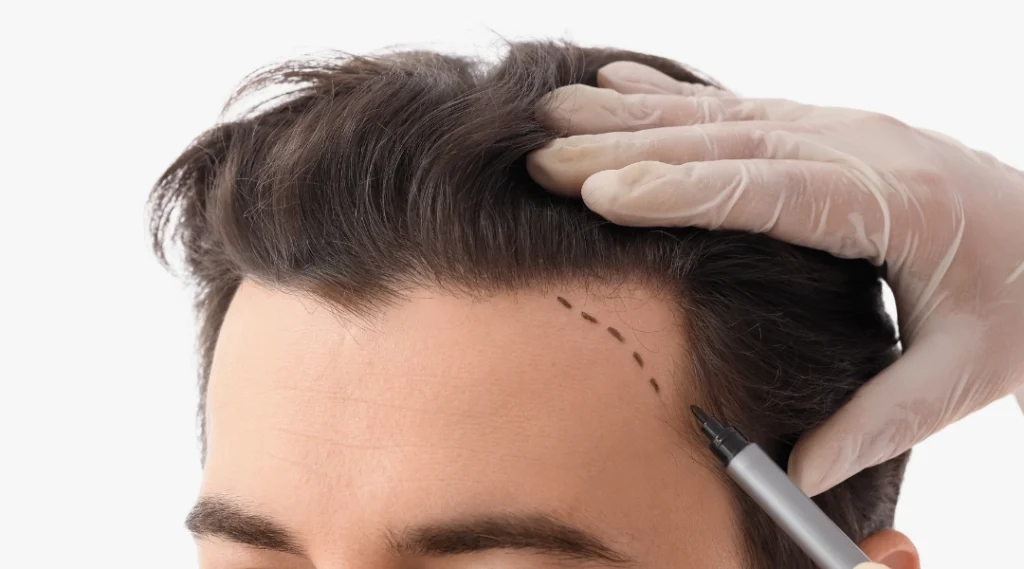
Planning And Hairline Design
The clinician maps the hairline and distribution plan based on your facial proportions, current pattern of loss, and likely future thinning. This is also where graft numbers are agreed, so the donor area is not overused.
FUE Harvesting From The Donor Area
Follicular units are harvested with micro-punch tools and kept hydrated while they are prepared for implantation. Single-hair grafts are often reserved for the front hairline, with multi-hair grafts placed behind for coverage.
Channel Opening With Sapphire Blades
Sapphire blades are used to create microchannels in the recipient area at the planned angles and spacing. The aim is controlled placement with minimal unnecessary trauma to surrounding tissue.
Graft Placement And Aftercare
Grafts are inserted into the prepared sites, the scalp is cleaned, and a post-op routine is explained in detail. Early care usually focuses on gentle washing, sleep position, and avoiding friction or heavy exercise for a short period.
What People Like About Sapphire FUE
When it is done well, Sapphire FUE may offer practical advantages during the early healing phase and in fine-detail areas. The blade itself is not the “result,” but it can support precision.
- Cleaner, smaller recipient sites that may reduce crusting and redness in the first days.
- Precise control of incision size, angle, and direction—especially helpful for natural hairline work.
- Potential for close graft placement in suitable scalps, supporting a dense look without harsh transitions.
- A refined recipient-area healing pattern, since sites are tiny and typically heal quickly.
Who It Suits And When To Be Cautious
Sapphire FUE is often a good match for people with stable, patterned hair loss and adequate donor density. It can also work for selected women, but a careful diagnosis is essential because some female hair loss patterns are diffuse.
Caution is needed if donor supply is limited, if you have uncontrolled scalp inflammation, or if you expect “full teenage density” from a small donor area. In those cases, medical treatment, a staged plan, or an alternative technique may be more realistic.
Recovery And Results: A Realistic Timeline
Healing and growth vary, but many patients experience a similar pattern after FUE-based surgery.
- Days 1–7: mild swelling, tightness, and small crusts around grafts; careful washing is key.
- Weeks 2–6: transplanted hairs often shed (a normal cycle), while follicles stay under the skin.
- Months 3–6: early regrowth becomes noticeable; texture may change as hairs mature.
- Months 9–12: density and thickness continue to improve; the crown can take longer.
Questions To Ask Before Booking Sapphire FUE
Small details matter in hair transplantation. These questions help you evaluate safety, planning quality, and long-term thinking.
- Who performs the critical steps, and is a physician directly involved in planning and site creation?
- How is graft quality protected (hydration, temperature, and time out of body)?
- How will the donor area be preserved if you may need future procedures?
- What does the aftercare plan include, and who supports you after you return home?
Frequently Asked Questions
Does Sapphire FUE Hurt?
Local anesthesia is used for both donor and recipient areas. Most people describe pressure and soreness rather than sharp pain once the scalp is numb.
Is Sapphire FUE Better Than Classic FUE?
Sapphire blades can support cleaner site creation, but outcomes depend far more on diagnosis, surgical skill, and graft handling. A well-executed classic FUE can outperform a poorly planned Sapphire FUE.
Will There Be Scarring?
FUE does not leave a long linear scar, but it does create tiny dot scars in the donor area. In most patients, they are hard to see after healing, especially with moderate hair length.
When Will I See Final Results?
Early growth often starts around months three to four, with ongoing thickening through month twelve. Some patients see continued refinement beyond a year, particularly in the crown.